
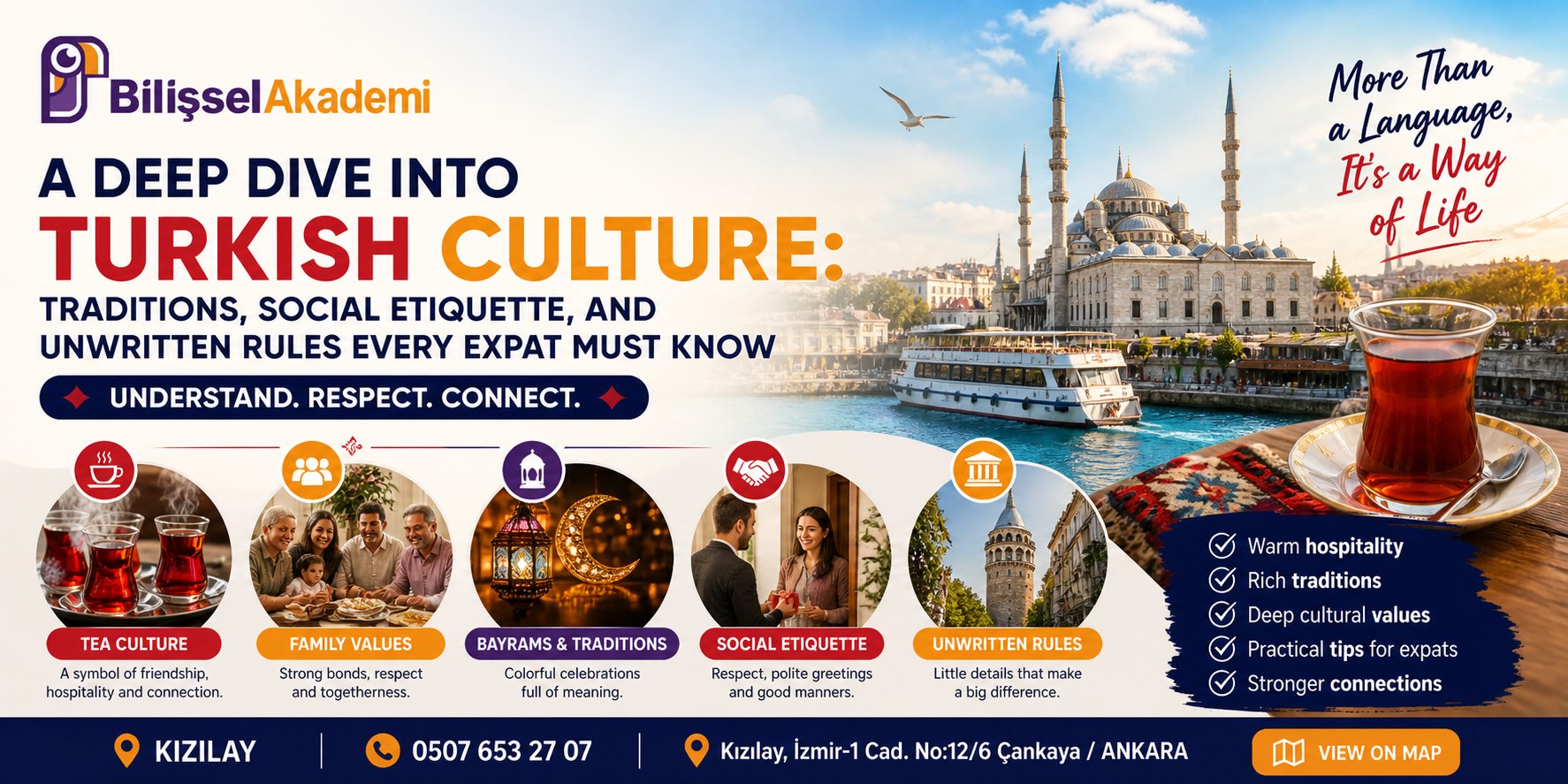
🧿 A Deep Dive into Turkish Culture:
Traditions, Social Etiquette, and Unwritten Rules Every Expat Must Know
Turkish culture is famously warm, highly expressive, and deeply rooted in strong social relationships. For expats living in Turkey, mastering the language is important, but decoding the culture is the true key to feeling at home. Daily life here is profoundly shaped by an ancient code of hospitality, deep respect for elders, the omnipresent tea culture, tight family bonds, and a complex web of unwritten social rules.
Many foreigners arrive expecting language to be their biggest hurdle, only to realize that navigating social expectations can be just as confusing. This definitive guide, brought to you by Bilişsel Akademi Kızılay, explains the critical traditions, etiquette rules, and cultural habits you need to connect confidently and respectfully within Turkish society.
Turkish Hospitality: Much More Than Just Being Friendly
Turkish hospitality (Misafirperverlik) is the absolute cornerstone of the culture. In Turkey, a guest is often considered a “Guest of God” and treated with the utmost care, whether they are a relative, a neighbor, or a first-time foreign visitor.
The Food Avalanche
Hosts will almost certainly prepare more food than necessary and will repeatedly insist you eat more. This is not meant as pressure; it is their way of ensuring you feel welcome and satisfied.
Refusing Politely
Refusing every offer immediately and too directly can feel cold. It is best to accept a small amount or refuse gracefully with warm appreciation.
Never Empty-Handed
When visiting a Turkish home, bringing a small gift (like baklava, chocolates, or flowers) is standard protocol and highly appreciated.
The Lifeblood: Turkish Tea & Coffee
To understand Turkey, you must understand its hot beverages. They are not merely drinks; they are the foundation of negotiation, friendship, and socialization.
☕ Turkish Tea (Çay)
Served in small tulip-shaped glasses, tea is part of the everyday rhythm in homes, offices, and bazaars. Accepting tea is a simple, powerful way to signal openness and participate in social life.
- Çay alabilir miyim? (Can I have tea?)
- Şu an içemeyeceğim, teşekkür ederim. (I cannot drink it right now, thank you.)
🏺 Turkish Coffee (Türk Kahvesi)
Turkish coffee feels more personal and ceremonial than tea. It is sipped slowly and is deeply connected to family visits and traditions. You will be asked how sweet you want it before it is brewed.
- Sade (No sugar)
- Orta (Medium sugar)
- Şekerli (Sweet)
Social Etiquette and Respect for Elders
Greetings are vital. A simple Merhaba when entering a shop or an elevator creates a warm interaction. Furthermore, respect for elders dictates much of the social hierarchy.
Common Greetings
- Günaydın: Good morning
- İyi günler: Good day
- Hoş geldiniz: Welcome (Reply: Hoş bulduk)
Respectful Behavior
- Always use the formal Siz with elders or officials.
- Offer your seat to elderly people on public transport.
- Listen patiently and avoid overly casual language too early.
Family, Festivals, and Celebrations
Family Life
Family is the strongest pillar of Turkish culture. Frequent phone calls, weekend breakfasts with relatives, and taking advice from the extended family are the norm. This closeness reflects deep loyalty and care.
Bayram Traditions
During Ramazan Bayramı and Kurban Bayramı, the focus shifts entirely to community and family. People visit elders, offer sweets, and exchange greetings like “İyi bayramlar” (Happy holiday).
Wedding Culture
Turkish weddings (Düğün) are massive, lively, and communal. They involve traditions like the Kına gecesi (Henna night), traditional line dancing (Halay), and the formal gift-giving ceremony (Takı töreni).
Magic Phrases & Common Misunderstandings
Using these specific expressions proves you respect the culture:
- Kolay gelsin: “May it come easy.” (Said to anyone working).
- Ellerinize sağlık: “Health to your hands.” (To thank someone who cooked for you).
- Geçmiş olsun: “May it pass.” (Said to the sick or those facing difficulty).
- Başınız sağ olsun: Condolences after a loss.
Avoiding Misunderstandings
Cultural misunderstandings happen when expats view Turkish habits through their own lens. Remember that repeated food offers show care, not pressure. Personal questions from locals are usually intended to show friendliness. Small talk is never a waste of time; it is the essential first step to building trust.
Learn the Language, Live the Culture
Language and culture are deeply connected. When expats learn Turkish, they also learn how to show respect, express care, welcome guests, and build lasting relationships. You don’t need to understand every custom perfectly on day one; what matters is your willingness to try.