
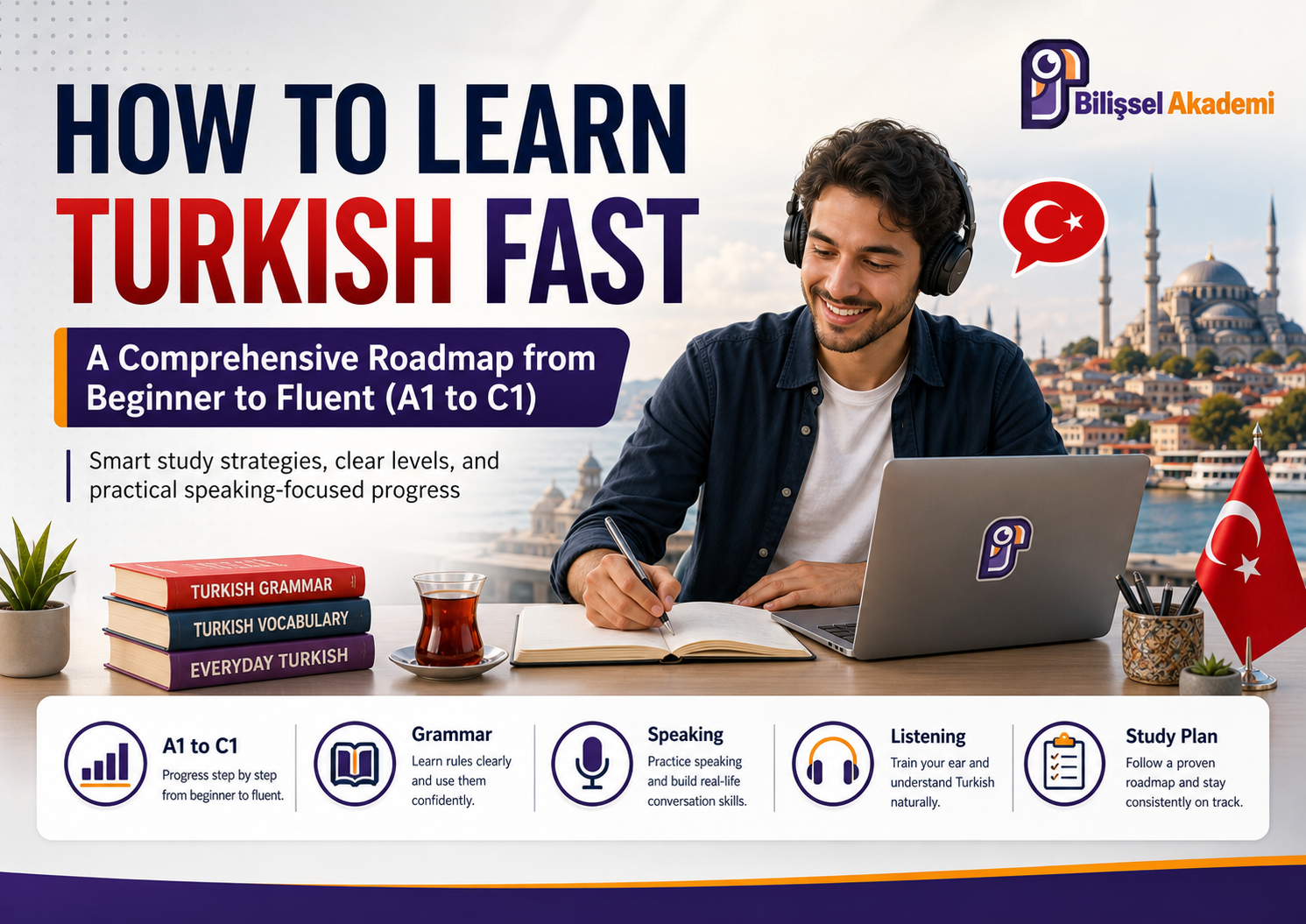
🚀 How to Learn Turkish Fast:
A Comprehensive Roadmap from Beginner to Fluent (A1 to C1)
Learning Turkish fast is entirely possible, but it requires much more than sporadically memorizing random vocabulary lists or tapping through language apps for five minutes a day. Turkish possesses a remarkably clear structure, highly logical grammar, and predictable suffix patterns. When learners adopt the correct roadmap, they can accelerate their journey from absolute beginner to confident, fluent communication.
This definitive guide, created by the language experts at Bilişsel Akademi Kızılay, explains exactly how to learn Turkish from A1 to C1. We provide a practical study plan, essential material recommendations, targeted speaking strategies, and the realistic habits required to achieve rapid fluency.
What “Learning Fast” Actually Means
Fast learning does not mean skipping the foundational basics. It means studying the right topics, in the exact right order. Countless learners waste months jumping haphazardly between YouTube videos, grammar workbooks, and scattered vocabulary lists without a cohesive system.
A Smart Turkish Learning Plan Must Include:
- Clear, actionable goals segmented by level (A1 to C1).
- Daily, contextual vocabulary practice.
- Grammar learned through real-world context, not isolated, abstract rules.
- Consistent, active listening and speaking practice.
- Real-time writing correction and personalized feedback.
Laying the Groundwork: A1 and A2 Levels
A1 Level: The Foundation
At the absolute beginner stage, your objective is to grasp basic sounds, greetings, and simple sentence structures. Do not try to learn everything at once.
Focus Areas:
- The Turkish alphabet and 100% phonetic pronunciation.
- Basic greetings, numbers, days, and time expressions.
- Simple present tense sentences.
- Question words (ne, kim, nerede, nasıl).
- Essential verbs (gelmek, gitmek, yapmak).
Start speaking immediately. Even basic sentences like “Kahve içmek istiyorum” tune your brain to the syntax.
A2 Level: Daily Communication
At A2, Turkish becomes highly practical. You transition into using the language for shopping, taking transport, dining, and navigating daily routines.
Focus Areas:
- Mastering two-way and four-way vowel harmony.
- Plural and possessive suffixes.
- Critical noun cases (-e, -de, -den, -i).
- Past tense (di’li geçmiş) and future tense (gelecek zaman).
- Basic listening comprehension with slow, clear speech.
Stop translating from English. Start building automatic Turkish sentence patterns.
Crossing the Bridge: B1 and B2 Levels
B1 Level: The Conversational Pivot
B1 is where learners begin to feel independent. You can discuss past experiences, future plans, and daily problems. However, this is also the infamous “plateau” where many get stuck.
Common B1 Challenges:
- Understanding natural, fast-paced spoken Turkish.
- Stacking multiple suffixes correctly while speaking in real-time.
- Choosing the appropriate tense without long pauses.
At B1, private speaking practice is vital. You need active correction to fix repeated mistakes before they fossilize.
B2 Level: Confidence & Flexibility
B2 Turkish means you can tackle complex topics, understand native-speed conversations, and communicate comfortably in both social and professional environments.
Focus Areas:
- Advanced sentence connectors (bağlaçlar).
- Structuring opinions and logical arguments.
- Navigating the nuances of formal vs. informal Turkish.
- Writing clear emails, essays, and reports.
Ditch beginner textbooks. Switch entirely to Turkish podcasts, news articles, and native interviews.
🏆 C1 Level: Advanced Fluency
C1 indicates you can use Turkish effectively in rigorous academic, corporate, and complex social situations. The focus shifts from mere correctness to natural, native-like expression.
- Academic and professional vocabulary.
- Advanced grammar structures (participles).
- Mastering natural idioms and cultural expressions.
- Fluent, rapid speaking with minimal hesitation.
📅 The Ideal Weekly Study Plan
Even 45 to 60 minutes a day yields massive progress if the study is highly focused and balances input, output, and correction.
- 3 Days: Grammar and contextual vocabulary practice.
- 3 Days: Active listening and speaking practice.
- 2 Days: Reading short texts or news.
- 2 Days: Writing paragraphs or emails.
- 1-2 Days: Private VIP lesson for guided correction.
Common Mistakes & The Power of Speaking
Many learners understand Turkish far better than they speak it because recognition and production are completely different neurological skills. Speaking practice forces your brain to actively produce Turkish, making grammar automatic and building unshakeable confidence.
Mistakes That Slow You Down:
- Avoiding speaking until you feel “ready.”
- Studying vocabulary without sentence context.
- Translating directly from English logic.
- Relying strictly on apps without expert human feedback.
Why VIP Lessons Accelerate You:
- Immediate correction of deep-rooted mistakes.
- A customized roadmap matching your exact goals (TYS, daily life, corporate).
- Intensive, high-pressure speaking practice.
- Saves you months of aimless self-study.
Final Thoughts
Learning Turkish fast is not about rushing—it is about using your time efficiently. When you study grammar in a logical sequence, practice vocabulary in context, listen actively, speak from day one, and receive expert feedback, Turkish becomes highly manageable. Consistency, paired with professional guidance, is the ultimate secret to fluency.