
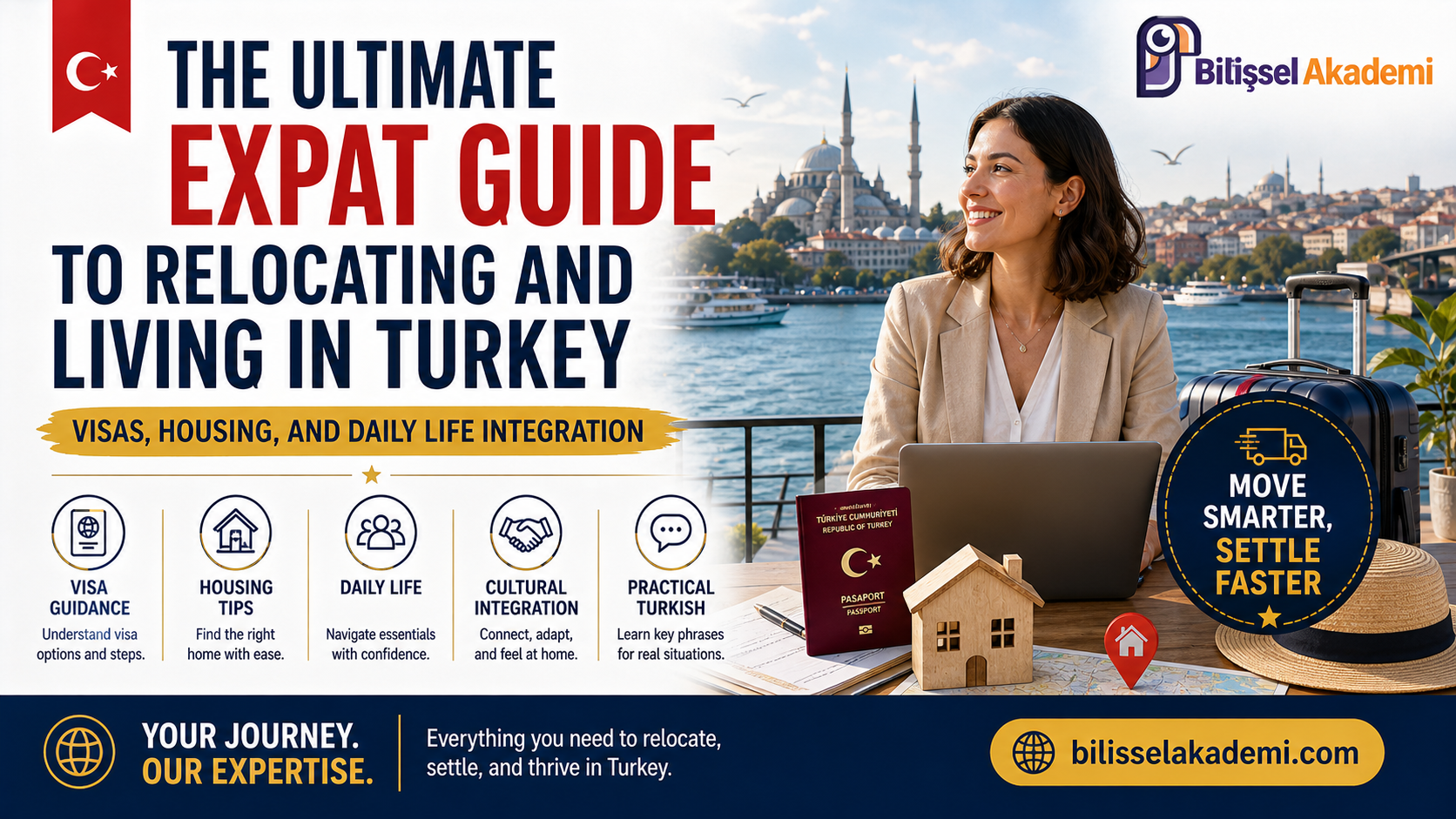
🌍 The Ultimate Expat Guide to Relocating and Living in Turkey:
Visas, Housing, and Daily Life Integration
Relocating to Turkey can be exciting, practical, and life-changing, but it also requires careful planning. Expats usually search for the same essential questions before moving: Do I need a visa? How can I apply for a residence permit? Where should I live? How much Turkish do I need? How can I adapt to daily life without feeling lost?
This guide brings the most important relocation topics together in one clear roadmap. It covers visas, residence permits, housing, healthcare, transportation, banking, language, culture, and daily life integration for foreigners planning to live in Turkey.
📝 Before Moving: What to Plan First
A successful move starts before you arrive. The more prepared you are, the smoother your first months will be.
- Check your visa or visa-exemption status.
- Prepare passport validity and official documents.
- Research cities and neighborhoods based on your lifestyle.
- Plan temporary accommodation for your first weeks.
- Set a realistic monthly budget.
- Start learning basic Turkish before arrival.
🛂 Visa Options for Foreigners
Visa rules depend on nationality, purpose of travel, and length of stay.
- Visa-free entry: Some nationalities can enter for a limited period without a visa.
- e-Visa: Available for eligible travelers (tourism/business).
- Consular visa: Required for study or work.
- Residence permit: Needed if staying longer than your legal visa period.
Residence Permits (İkamet) in Turkey
If you plan to stay longer than your visa allows, you will need a residence permit. Applications are made through the official e-İkamet system and processed by the Presidency of Migration Management.
Short-Term Permit
Used by expats, property owners, and tourists extending their stay.
Student Permit
Exclusively for international students enrolled in Turkish universities.
Family & Long-Term
For spouses of citizens, or foreigners meeting the 8-year continuous legal stay requirement.
Finding Housing & Choosing Your City
Housing Tips
Turkey offers diverse housing from furnished city flats to gated residences. Always visit apartments in person, check heating/transportation access, clearly ask about deposit terms and monthly dues (aidat), and ensure the address is eligible for official registration.
🏥 Healthcare & Insurance
Valid health insurance is mandatory for residence permits. Many expats start with private health insurance. Keep digital copies of your policy, research local clinics, and learn basic medical Turkish.
💳 Banking & Setup
Your first month requires setting up a Turkish SIM card, registering your address, and opening a bank account (which usually requires a tax number and proof of address).
🚇 Transportation
Buy the local transport card (e.g., AnkaraKart, Istanbulkart). Download official transport apps, check routes before peak hours, and be prepared for vibrant city traffic.
Learning Turkish & Cultural Integration
Many expats can manage in English in large cities, but Turkish makes daily life vastly easier. Turkish culture values hospitality, respect for elders, and warm communication. Understanding these helps you avoid misunderstandings and build trust.
Essential Survival Phrases:
- Merhaba: Hello
- Teşekkür ederim: Thank you
- Yardımcı olabilir misiniz? Can you help me?
- Randevum var: I have an appointment
- Adresimi kaydettirmek istiyorum: I want to register my address
- Biraz yavaş konuşabilir misiniz? Can you speak a little slowly?
Final Thoughts
Relocating to Turkey is easier when you understand the full process. The first months may include confusion around paperwork, language barriers, and finding trustworthy information. These challenges are completely normal. Expats who learn Turkish, understand local systems, and prepare carefully adapt the fastest.